
Survival Budget Safety Net: How to Budget Before A Crisis Hits
We’re not waiting on economists to use the word “recession” to confirm what we already know—American families are in a financial crisis. The headlines are irrelevant when we’re watching the story unfold inside our own homes.
Rent is behind.
Credit cards are maxed out.
Retirement accounts are being drained just to keep the fridge full.
Outstanding credit card debt is becoming the norm.
We’re walking through it with our clients every day.
That’s why it’s time to talk about the survival budget: a wise, proactive step to reveal exactly where you can trim back when times do get tough. If you’re currently facing hardship, this may be the moment to put it in place. If not, you’ll be prepared with a lean, no-frills plan that covers only your most essential needs.
Let’s walk through how to build a survival budget, step by step.
What Is a Survival Budget?

A survival budget is a bare-bones budget, or plan that helps you maintain the essentials of daily life when finances are stretched thin. This isn’t about hitting savings goals or paying off your mortgage early or optimizing debt repayment. It’s about protecting your home, feeding your family, and staying out of crisis.
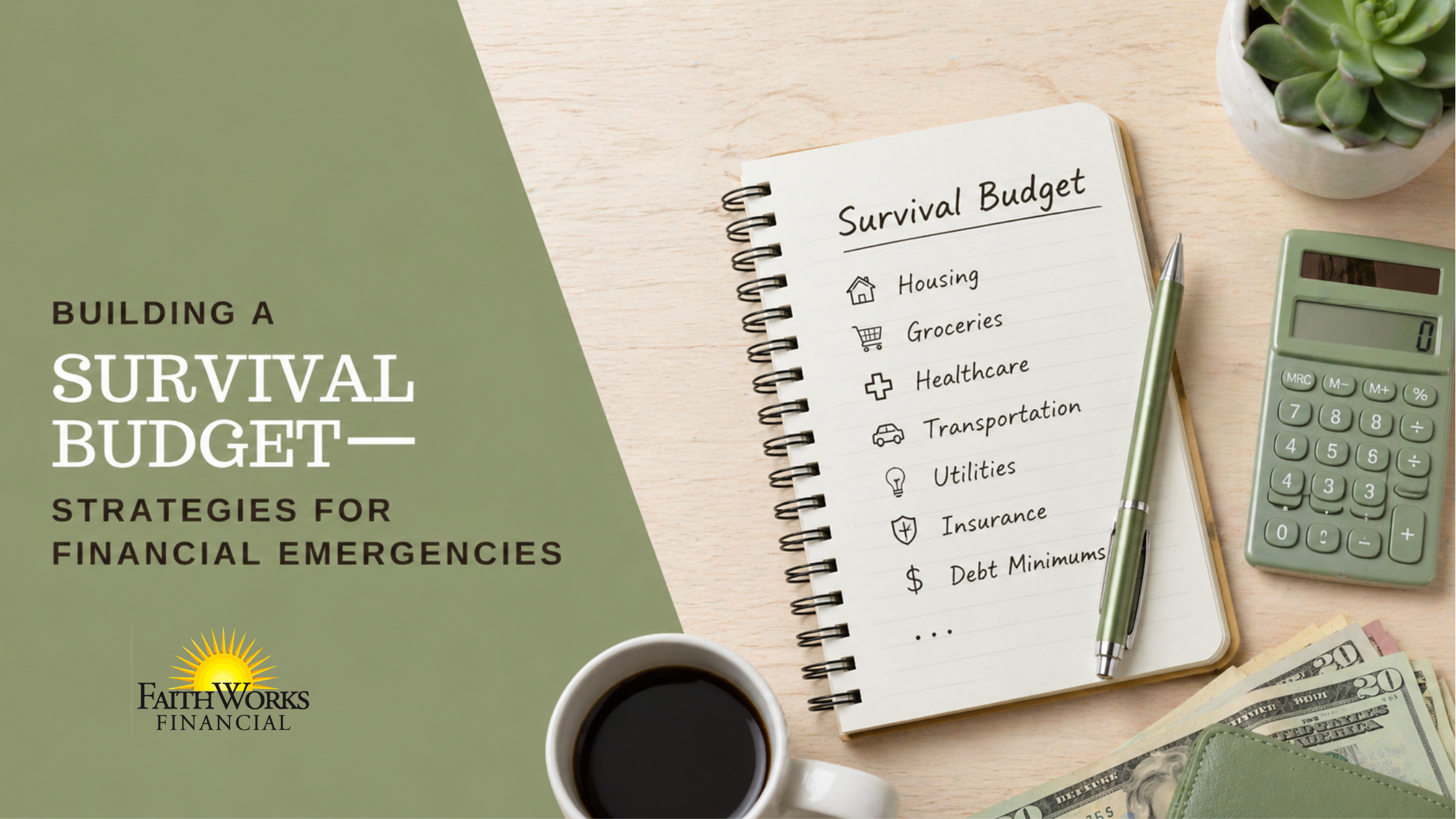
In a survival budget, the goal is simple: cover only what you need to live. That includes:
- Housing
- Utilities
- Basic groceries
- Transportation
A survival budget prioritizes essentials and minimizes unnecessary overhead.
The Cost of Delay: Family Costs Are Already Rising
For many families, even the minimum amount needed to stay afloat feels out of reach. When that’s the everyday reality, a personal survival budget is not just helpful, but urgent.
As a debt counseling agency, we see it firsthand, but the pressure is not just anecdotal. Polls and reports from the past year show a trend of difficulty.
Families across all income levels are struggling with living expenses and financial anxiety.
A May 2026 Realtor.com article displays how anxiety has changed summer vacation planning this summer, and Reuters experts see little reason to expect a change in confidence.
A May 2026 CNN poll found that 76% of Americans say higher prices are their biggest financial problem, underscoring how deeply cost-of-living stress is shaping household decisions right now.
ABC highlighted how childcare costs continue to put pressure on families trying to make ends meet.
Forbes reported that grocery shopping costs remain elevated.
Bankrate’s 2026 Annual Emergency Savings Report found that 58% of Americans have less emergency savings than last year, and 17% have none at all.
When and Where Financial Pressures Appear
Debt and financial pressure usually isn’t just due to overspending. More often, it’s because somehow, some way, life showed up and now the numbers simply don’t add up. Things may have been okay, but now there isn’t enough money to cover basic necessities, and it becomes a real crisis.
These pressures don’t just affect people living below the poverty level. Many households living well above the poverty line are relying on a second job or a side hustle just to make ends meet. “Too much” income makes support and benefits inaccessible, leaving them forgotten and unable to afford much beyond food and other basic needs.
Many families are one setback away from a real emergency.
Having a household survival budget and a plan for our money in hard times will help your household survive a difficult season.
Waiting to adjust until you’re in crisis often leads to choices made in panic, not wisdom. Preparing now gives you control. Your survival budget tells you exactly what you’ll need to cover when pressure comes.
Step One: Triage Your Monthly Bills
If you’re trying to create a survival budget, the first place to look is your monthly bills. Most people are surprised to discover how much they’re spending on things that aren’t actually needed. In good times, that’s fine, but a survival budget isn’t for today, it’s for when things change.
When you take a close look, you’ll probably find several opportunities to simplify your finances. This step is the foundation of your survival budget. You are creating a clear list of items you can quickly cut if circumstances change.
Here’s how to approach bill triage:
- List every recurring monthly expense (rent, insurance, subscriptions, etc.)
- Label each as “essential” or “non-essential”
- Cut, pause, or renegotiate everything that isn’t absolutely necessary
- Consider debt relief programs to simplify and reduce credit card payments
Start with easy wins:
- Cancel streaming services and automatic subscriptions
- Call your insurance provider for discounts
- Ask utility providers about hardship options or budget plans
- Move to a cheaper cell phone plan
If you have car finance or mortgage payments, now is the time to review your monthly payments and go over your bank statements to identify patterns and catch any unnecessary spending.
Every dollar you free up is a dollar you can redirect to essentials—and breathing room.
To stay ahead, you need to track rising expenses such as:
- Rent
- Groceries
- Utilities
- Healthcare premiums
- Transportation and auto insurance
And be sure to use recent statements to make your projections. Your survival budget should reflect current realities, not last year’s numbers.
Build Your Personal Survival Budget
Financial hardship can make it difficult to know where to start. Use our free Survival Budget Worksheet to identify your essential expenses, find areas where you can cut back, and create a plan for your household.
Understanding the Real Living Costs in 2026
One of the biggest challenges in 2026 is that living costs no longer resemble those of even a few years ago. Inflation may have eased from its peak, but the damage is done—groceries, gas, housing, and other essentials continue to stretch household budgets thin.
If you’re unsure whether your income is enough to meet today’s basic needs, the ALICE framework can help.
ALICE—which stands for Asset Limited, Income Constrained, Employed—is a national initiative by United Way that highlights the real cost of living for working households who earn above the poverty level but still struggle to afford necessities.
These are households that often don’t have enough money to afford basic necessities, even while holding down one or more jobs.
Find Out Where You Stand Financially
The ALICE Income Assessment Tool gives you a clearer picture of whether your income meets the threshold for basic economic stability in your area. It’s a helpful check-in—especially when you’re working with limited cash and need to make informed decisions about which expense categories to cut or keep. Based on your county and household size, the tool estimates whether your current income supports basic needs like housing, groceries, child care, transportation, health care, and taxes.
Meal Planning on a Survival Budget
One of the most underestimated tools in a personal survival budget is a simple meal plan. When done intentionally, it’s not just about saving money, but reclaiming control.
Here’s how to simplify your approach:
- Base meals around what’s on sale or in your pantry
- Cook in bulk and use leftovers
- Plan 5-7 meals at a time, and repeat for consistency
- Choose low-cost, high-nutrition staples (beans, rice, frozen veggies, eggs)
- Cut back on snacks, single-serving items, restaurants and takeout
A solid meal plan can cut your grocery bill significantly. You become intentional with your food choices. It reduces the daily decision fatigue that adds stress and spending. The goal is to stretch every grocery dollar without sacrificing nutrition or dignity.
If you’re unsure how to get started, contact local food banks or community outreach centers—many offer free meal plan templates and support for food and essentials.
When Survival Mode Feels Like a Setback
If you’re in this place right now, it’s easy to assume there’s no way out and ignore the problem. But the truth is, using a personal survival budget is an act of wisdom and strength. It’s proof that you’re refusing to give in to the struggle—and choosing to be proactive instead.
This season won’t last forever. But how you respond right now will shape your financial future.
Survival mode doesn’t mean giving up. It means adapting with intention, protecting your family, and preparing for better days ahead.

When finances stabilize, your next steps will be:
- Building back an emergency fund
- Reintroducing savings and giving
- Shifting toward long-term planning
- Exploring additional income streams
Ready for next steps?
FaithWorks Financial’s experienced debt counselors are ready to help. Complete the short form on the side of this page to request a free consultation.
Conclusion: Take Control Before the Crisis Gets Louder
You don’t need to wait for the news to catch up to what you already know. 2026 is a financial pressure cooker, and the smartest move you can make is to prepare your household.
Creating a personal survival budget isn’t about fear. It’s about faith, foresight, and freedom. No matter your situation—whether you’re a single adult, raising kids on one income, or one of many older adults navigating inflation on a fixed income—this approach applies across household types.
The goal isn’t perfection; it’s protection.
Build a simple meal plan, track your spending, and avoid emotional purchases. These small steps lead to informed decisions that help you avoid debt, manage loan repayments, and preserve personal savings when it matters most.
Hard times don’t define you. But how you respond to them can shape your future.
“Trust in the Lord with all your heart and lean not on your own understanding. In all your ways submit to him, and he will make your paths straight.”
— Proverbs 3:5–6

