How to Change Financial Habits: H.O.W. It Works
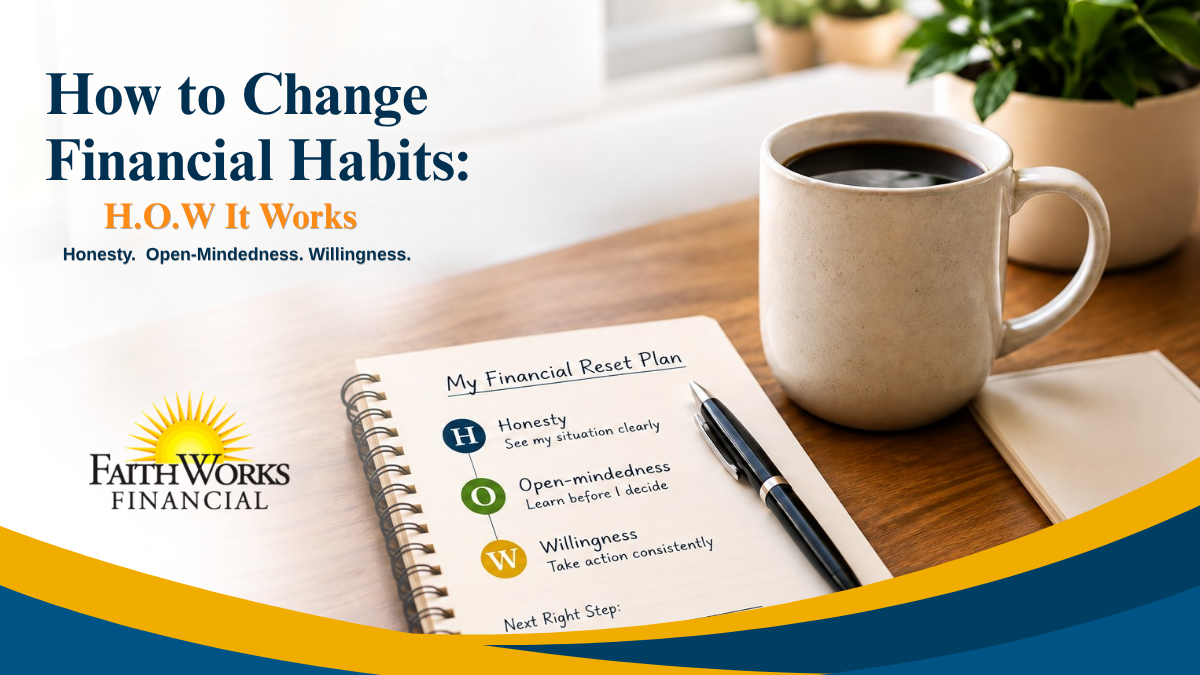
When you feel a need to change financial habits, you may search for the perfect budget template, an optimal debt strategy, or place your hopes in a future increase in income. But lasting financial change usually begins somewhere closer to home: with the decision to see clearly and honestly, learn with an open mind, and take the next right step.
A posture that actually leads to lasting change can be summed up in three words:
- Honesty
- Open-mindedness
- Willingness
Together, they form H.O.W.—a practical framework for changing financial habits. You get honest about where you are, become open-minded about what may help, and willingly take the actions your plan requires.
H.O.W. at a glance
- Honesty: Understand your complete financial situation without shame or avoidance.
- Open-mindedness: Learn how the available solutions work before deciding which one fits.
- Willingness: Turn what you have learned into specific, sustainable action.
Honesty: See the Situation Clearly

Honesty is the starting point because no financial plan can succeed if it is built on incomplete information. Look at the whole picture: income, expenses, balances, interest rates, missed payments, collection activity, spending patterns, and the pressures that contributed to the situation. A written Christian budget can make that picture easier to see.
This can be uncomfortable. You may need to admit that a payment is no longer sustainable, you’ve been avoiding an account, or your current approach isn’t working. But honesty is not condemnation. It is clarity.
Debt is not a measure of your character. Financial hardship can grow from job loss, illness, caregiving, inflation, divorce, emergencies, business challenges, or simply a series of decisions that made sense at the time but no longer fit your circumstances. Whatever brought you here, the goal is not to put you on trial. The goal is to understand what is true today so that you can make a sound decision about tomorrow.
Start with four questions:
- What do I owe, and to whom?
- What remains after my essential monthly expenses?
- Am I borrowing just to keep up with existing payments?
- Is my current plan reducing the problem, or only delaying it?
Begin With Your Checking Account and Credit Card Debt
Review a specific period—such as the last 60 or 90 days—across your checking account, savings accounts, and credit card bills. Look for a reliable picture, not one purchase to blame.
Start by separating essential living expenses from discretionary spending. Housing, utilities, groceries, transportation, insurance, and necessary medical expenses belong in a different category than impulse purchases, subscriptions, entertainment, and larger purchases you didn’t plan in advance.
Then gather the details for each credit card and other debt:
- Current balance and interest rate
- Minimum payment and due date
- Whether the account is current or past due
- Any late fees or penalty rates
- Whether you are using one account to make room for payments on another
With multiple credit cards, the total alone can hide a high-rate account, a card approaching its limit, or several due dates landing in the same pay period.
Name Bad Money Habits Without Naming Yourself Bad
Common bad money habits include spending without checking the budget, relying on credit for routine expenses, making impulse purchases when stressed, or assuming future income will cover today’s decisions. These patterns can wreak havoc over time, but they are behaviors—not an identity. Naming them makes a different financial decision possible the next time the same situation appears.
A spreadsheet or budgeting app can make recurring patterns easier to spot. The best tool is the one you will actually use.
Open-Mindedness: Learn Before You Decide

People often begin with one preferred answer: consolidation, settlement, bankruptcy, or repayment on the original terms at almost any cost. Those instincts are understandable, but the most familiar solution is not always the one that best fits the facts.
Set Realistic Financial Goals Before Choosing a Plan
Before comparing programs, define what you are trying to achieve. “I want to fix my finances” is sincere but difficult to measure. Realistic financial goals are more specific:
- Stop relying on a credit card for living expenses
- Bring past-due accounts current where possible
- Establish a starter emergency fund
- Pay off high-interest debt within a workable timeframe
- Create room for retirement savings and other long-term goals
Debt repayment, emergency saving, retirement accounts, health savings accounts, and family needs may compete for the same dollar. Consider how the pieces affect one another rather than pursuing one goal so aggressively that the rest of your financial health becomes fragile. A realistic goal fits your income, essential expenses, and season of life; it does not depend on perfect months or extra money your budget has never consistently produced.
Open-mindedness means learning how the main options actually work. Our overview of debt relief options offers a starting point. Depending on the circumstances, options may include:
- A focused budget and accelerated repayment plan
- A nonprofit debt management plan
- A debt consolidation loan
- Direct hardship arrangements with creditors
- A self-directed debt negotiation strategy
- A professionally managed debt settlement program
- Legal advice about bankruptcy or creditor lawsuits
Each path has advantages, costs, risks, and eligibility requirements. A consolidation loan may simplify payments, but it does not solve an underlying cash-flow problem on its own. A debt management plan may reduce interest, but it usually requires closing accounts and maintaining a structured payment plan. Debt settlement may substantially reduce what is repaid, but it generally involves missed payments, collection activity, credit damage, and possible tax consequences. Bankruptcy may offer powerful legal relief, but its suitability depends on the person’s complete financial and legal circumstances.
For credit card debt, a lower interest rate can make debt repayment faster and less expensive—but only if the payment remains affordable and new balances do not replace the old ones. Paying down revolving balances can also improve a credit utilization ratio over time. Still, protecting a credit score should not take priority over keeping food on the table, housing stable, or medical needs met.
Open-mindedness does not mean saying yes to every option. It means understanding the requirements, costs, risks, and realistic outcomes well enough to choose wisely. Good guidance should help you compare paths without pressuring you toward a product.
If debt settlement is among the possibilities you are considering, these three signs that debt settlement may make sense can help you determine whether it belongs in the conversation—or whether another option deserves priority.
“The way of fools seems right to them, but the wise listen to advice.” — Proverbs 12:15
Listening does not surrender your judgment. It strengthens it.

Willingness: Put the Plan Into Practice
Honesty tells you where you are. Open-mindedness helps you choose a path. Willingness is what moves you forward.
A good plan still requires action. Willingness may look like:
- Following a spending plan even when it feels restrictive
- Making the agreed payment consistently
- Building a small emergency cushion before accelerating debt payments
- Answering calls, opening mail, and responding to important notices
- Having difficult but necessary conversations within the household
- Adjusting the plan—or asking for help—when circumstances change
Willingness is not perfection. A successful plan accounts for setbacks. What matters is remaining engaged, communicating early, and returning to the plan when something knocks you off course.
Research helps explain why specificity matters. A large analysis of “implementation intentions” found that people were more likely to follow through when they decided in advance when, where, and how they would act—not merely what they hoped to accomplish.
Instead of saying broadly, “I need to work on my finances,” a specific statement makes that willingness concrete. A more intentional phrase might be: “Every Friday after dinner, I will review our spending and update the next week’s plan.”
Lasting progress may also require reducing expenses, selling something, increasing income, changing routines, or accepting a different timeline. That is not failure. It is the work of rebuilding.
Healthy Financial Habits That Support the Plan
Healthy financial habits are willingness practiced in ordinary life. Do not adopt every good habit at once. Choose the ones that protect your plan from its most likely interruptions.
Build an Emergency Fund in Stages
An emergency fund can keep a car repair, home expense, or medical bill from becoming new credit card debt. If three to six months of living expenses feels impossible, begin with a smaller savings goal—perhaps $500, $1,000, or one month of essential expenses. Keep it in a separate, accessible savings account, then build toward a longer-term target as your cash flow stabilizes.
Make It Easier to Save Money: Automate Savings Carefully
Automate savings through a recurring transfer from checking to savings shortly after payday, even if the amount is modest. Automatic transfers and bill payments can help you meet due dates and avoid late fees, but they should follow the rhythm of your income. Schedule them carefully so a good habit does not trigger an overdraft or leave too little for necessities.
Plan for Discretionary Spending and Larger Purchases
A workable budget should not pretend every nonessential purchase will disappear. When cash flow allows, enjoy your joys.
For larger purchases, create a sinking fund: set the amount and target date, then save a portion each month. The future expense becomes a savings goal instead of a surprise credit card balance.
Connect Today’s Actions to Long-Term Financial Goals
Financial wellness is more than eliminating a balance. It includes control over monthly decisions, the capacity to absorb a setback, and room for future goals. Today that may mean stabilizing bill payments; later it may mean long-term savings, retirement, homeownership, education, or generosity. Healthy financial habits give those goals a foundation.
H.O.W. Works as a Cycle
Honesty, open-mindedness, and willingness are not boxes you check once. As circumstances change, return to the cycle: Is the plan still working? Do I need new information? What action is required now?
That cycle can be used for nearly any financial goal—getting out of debt, rebuilding savings, repairing credit, preparing for retirement, or learning to manage money differently as a family. The Consumer Financial Protection Bureau’s review of financial well-being research similarly points to the value of positive financial behaviors, practical financial skills, and confidence in your ability to reach financial goals.
The cycle also creates room for grace: you can acknowledge past decisions without remaining trapped by them and recognize present limitations without giving up hope.
Faith does not require us to deny reality. It can give us the courage to face reality with humility, wisdom, and hope. Transformation often begins when we allow our thinking to be renewed—and then let that renewed understanding shape what we do next.
Bring this idea into a real conversation.
“What has God entrusted to you that you could manage more faithfully? How can gratitude, wisdom, and generosity shape the way you use those gifts in your everyday life?”
Choose a calm moment. The goal is understanding, not solving everything in one conversation.
Put H.O.W. into practice
Use the free H.O.W. Financial Reset Worksheet to create an honest financial snapshot, identify the solutions you need to investigate, and choose one specific action for the next seven days.
Download the H.O.W. Financial Reset Worksheet →
More practical guidanceKeep building your financial toolkit.
Explore FaithWorks articles and resources about budgeting, debt, credit, family finances, and biblical stewardship.
Start With the Next Honest Step
If your finances feel overwhelming, you do not have to solve everything today. Start with H.O.W.:
- Get honest. Gather the facts and name the problem without shame.
- Stay open-minded. Learn how the available solutions work before deciding.
- Be willing. Take the next action your chosen plan requires.
The best financial solution is the one you understand, can realistically sustain, and are prepared to follow.
At FaithWorks Financial, our role is to help you understand the landscape, compare realistic paths, and move forward with clarity. The decision remains yours. Whether your next step involves budgeting, counseling, consolidation, a debt management plan, settlement, legal guidance, or another solution, meaningful change begins the same way.
That is H.O.W. it works.
Frequently Asked Questions
H.O.W. stands for honesty, open-mindedness, and willingness. Honesty helps you understand your present financial situation, open-mindedness helps you consider the available solutions, and willingness turns your chosen plan into action.
Begin by gathering the facts: your income, essential expenses, debts, interest rates, minimum payments, and any past-due accounts. Then choose one small, specific action you can complete within the next seven days, such as creating a spending plan, calling a creditor, or comparing debt relief options.
A past setback does not mean you cannot succeed. Review what made the earlier plan difficult, adjust it to fit your actual circumstances, and make the next action more specific. Progress is usually built through consistent course corrections, not a perfect record.
Three to six months of essential living expenses is a common long-term target, but it does not need to be your first milestone. A smaller starter emergency fund can help prevent a routine surprise from becoming new debt.
It’s best when the two goals can work together. Keeping a modest emergency cushion can reduce the likelihood that the next unexpected expense goes back onto a credit card. After that foundation is in place, it may make sense to direct more available money toward high-interest debt. The right balance depends on your income stability, expenses, interest rates, and access to savings.
The right solution depends on the kinds of debt you have, your payment status, available cash flow, credit profile, assets, goals, and tolerance for risk. Compare the costs, consequences, timeline, and requirements of each option before committing. A consultation with a FaithWorks advisor can help you understand the options available to you.
FaithWorks Financial provides financial education and guidance. Information on this page is general in nature and is not legal, tax, or investment advice. Program availability, risks, costs, and results vary by provider and individual circumstances.

